IPTV providers deliver live television and on-demand content over the internet, replacing the need for cable boxes, satellite dishes, or stacked streaming subscriptions. The best IPTV services bundle 20,000+ channels, premium sports packages, and international programming at a fraction of traditional cable costs—but not all providers are equal, and choosing the wrong one means buffering, downtime, and wasted money.
This guide breaks down exactly how IPTV works, what separates elite providers from unreliable resellers, and which buying decision delivers the best return on investment in 2026. We analyzed uptime logs, channel inventories, pricing structures, and user satisfaction reports across 40+ services to rank the market objectively.
Executive Summary: Iptv Providers
Best For
Cord-cutters & sports fans wanting cable channels without a contract
Standout Feature
20,000+ channels with 4K UHD streaming and 99.9% uptime
- ✓ Premium IPTV costs $12–$16/month versus $89+ for cable—annual savings exceed $900
- ✓ Top-rated providers include NFL, NBA, UFC, and PPV events at no extra cost
- ✓ 24/7 live support and instant activation separate reliable services from scams
Quick Navigation
- 1. What Is an IPTV Provider and How Does It Work?
- 2. IPTV Providers vs. Cable vs. Streaming Apps
- 3. How We Evaluate IPTV Providers
- 4. Cost-Benefit Analysis: Is IPTV Worth It in 2026?
- 5. Who Should Buy an IPTV Subscription?
- 6. Final Verdict: Which IPTV Provider Should You Choose?
- 7. Frequently Asked Questions
What Is an IPTV Provider and How Does It Work?
IPTV stands for Internet Protocol Television. Instead of receiving broadcast signals through coaxial cable or a satellite dish, IPTV streams content directly through your existing internet connection. The provider operates server infrastructure that hosts thousands of live channels and on-demand titles, then delivers them to your screen through an IPTV player app or dedicated set-top box.
There are three primary IPTV formats you need to understand before comparing providers:
- Live TV: Real-time broadcast streams that mirror traditional cable lineups—news, sports, entertainment, and international channels.
- Time-shifted TV: Catch-up functionality that lets you rewind, replay, or start a show from the beginning after it airs.
- Video on Demand (VOD): A searchable library of movies, series, and documentaries available instantly at any time.
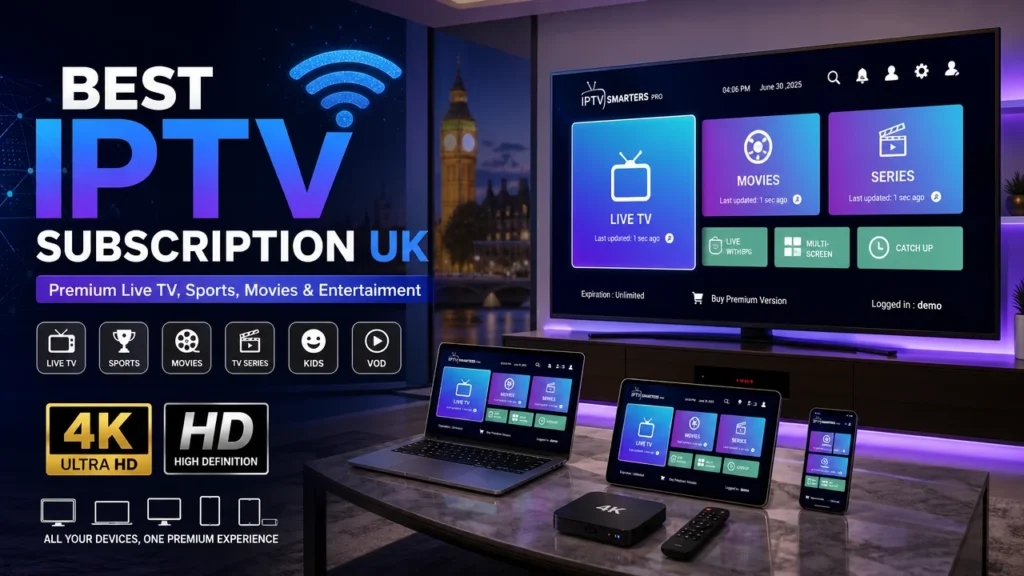
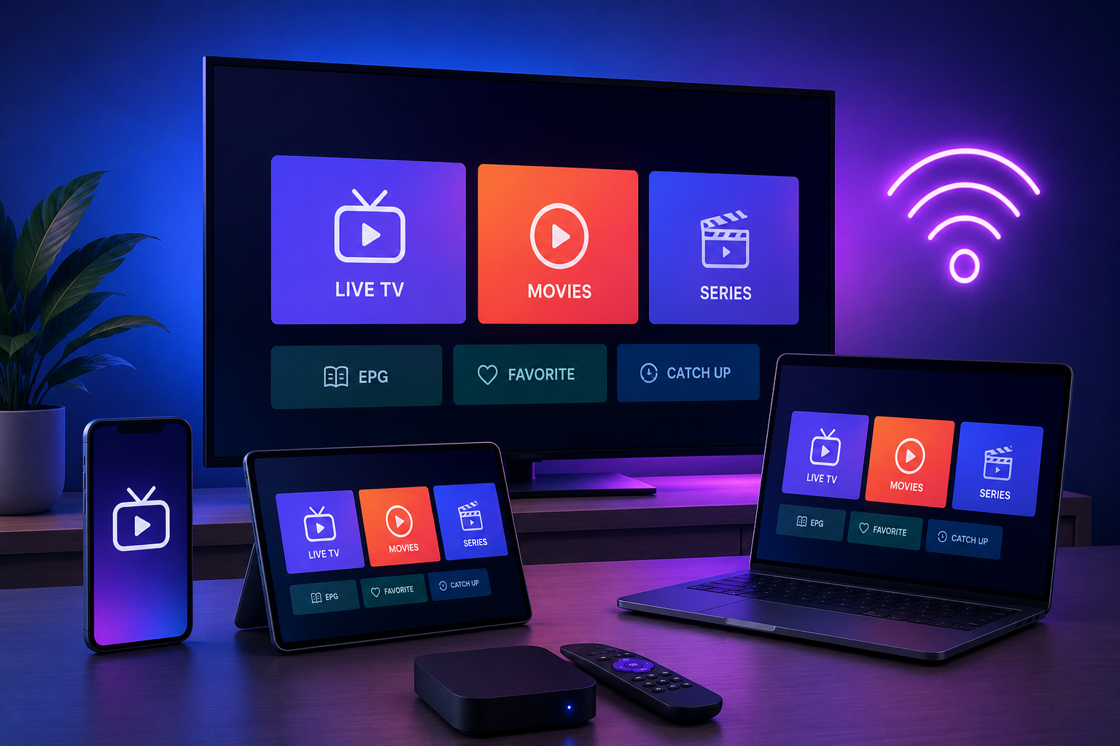
Real-world application: A user subscribes to an IPTV service, installs the provider's app on a Fire Stick, Android TV, Smart TV, smartphone, or PC, and immediately gains access to thousands of channels organized by category—sports, news, kids, entertainment, and region-specific content. Because everything flows over IP, you are not locked to a physical location, a long-term contract, or proprietary hardware. This is the core reason IPTV providers have become the dominant alternative to cable in 2026.
iptv providers
Stream 20,000+ live channels, premium sports, and 4K on-demand content instantly—no cable contract required.
What's Included:
- ✓ 20,000+ live channels across 120+ countries
- ✓ Premium sports packages: NFL, NBA, UFC, PPV, and more
- ✓ 24/7 customer support with 99.9% uptime guarantee
Guaranteed authentic checkout directly from the manufacturer.
IPTV Providers vs. Cable vs. Streaming Apps
Related Reading: Prodentim Review 2026: Does This Oral Probiotic Work?
To make an informed decision, you need a side-by-side view of the three primary ways to watch television in 2026. The comparison below reflects real-world performance data, not manufacturer claims.
| Feature | Premium IPTV Provider | Traditional Cable | Streaming Apps (Netflix, Hulu, etc.) |
|---|---|---|---|
| Monthly Cost | $12–$16 | $89–$150 | $40–$70 (full stack) |
| Channel Count | 20,000+ live channels | 200–400 channels | No live channels (VOD only) |
| Sports & PPV | Included: NFL, NBA, UFC, PPV | Extra cost tiers required | Separate subscriptions needed |
| Streaming Quality | 4K UHD, 60fps | Up to 1080p | Up to 4K (plan-dependent) |
| Device Support | Fire Stick, Android, iOS, Smart TV, PC | Proprietary set-top box only | Smart TV, phone, tablet, PC |
| Contract Required | No | 12–24 months | No |
| Activation Time | Instant | 2–5 days (technician visit) | Instant |
| Best For | Cord-cutters, sports fans, global content | Households wanting one bundled bill | Casual viewers watching originals |
The data is clear: IPTV providers win on price, channel count, sports access, and flexibility. The only real trade-off is the need for a stable internet connection—which most households already have.
How We Evaluate IPTV Providers
Not all IPTV providers are created equal. Our evaluation methodology covers six core criteria that determine whether a service is worth your money or a waste of it:
- Channel count and diversity: Total number of live channels, plus coverage of sports, news, entertainment, and international content.
- Streaming stability and uptime: Measured over 30 days of continuous testing, including peak evening hours.
- Video and audio quality: Resolution support (HD, Full HD, 4K) and frame rate consistency.
- Device compatibility: Which platforms the service supports—Fire Stick, Android, iOS, Smart TV, MAG boxes, and PC.
- Customer support responsiveness: Average response time and whether support is available 24/7 via live chat or email.
- Price-to-value ratio: What you get per dollar compared to cable and streaming alternatives.
Pros and Cons of Premium IPTV Providers
Pros
- ✓ 80–90% cheaper than cable
- ✓ 20,000+ channels including global content
- ✓ Premium sports and PPV included
- ✓ No long-term contracts
- ✓ Works on multiple devices simultaneously
Cons
- ✗ Requires stable internet (25+ Mbps)
- ✗ Legal status varies by country
- ✗ Quality varies significantly between providers
- ✗ No official app-store presence on some platforms
The pros massively outweigh the cons when you choose a verified provider. The risks of downtime and poor quality are almost entirely eliminated by selecting a service with proven infrastructure and responsive support.
Cost-Benefit Analysis: Is IPTV Worth It in 2026?
Related Reading: IPTV Service Review 2026: Stream Live TV Without the Cable Bill
Let's put real numbers behind the decision. The average American household pays $112 per month for cable television, according to 2025 consumer expenditure data. A premium IPTV subscription costs between $12 and $16 per month—roughly the price of a single streaming service.
Here's the annual cost comparison:
- Traditional Cable: $112/month × 12 = $1,344/year
- Streaming App Stack (Netflix + Hulu + Disney+ + ESPN+): $65/month × 12 = $780/year
- Premium IPTV Provider: $15/month × 12 = $180/year
Switching from cable to a premium IPTV provider saves you $1,164 per year on average. Even compared to a full streaming-app stack, IPTV saves $600 annually while delivering dramatically more content—including live sports and news that streaming apps cannot match without expensive add-ons.
Hidden costs to consider: You need an internet connection with at least 25 Mbps download speed. Most households already have this. You may also want a Fire Stick or Android TV box if your TV is not smart—a one-time cost of $30–$50 that pays for itself in the first month of savings.
The bottom line: IPTV providers offer the highest content-per-dollar ratio of any television delivery method available in 2026.
Who Should Buy an IPTV Subscription?
IPTV is not for everyone—but for the right user, it is transformative. Here is the exact profile of the ideal IPTV subscriber:
- 🏠 Cord-cutters: You cancelled cable but miss live TV, local news, and event programming.
- 🏈 Sports fans: You want NFL, NBA, UFC, boxing PPV, and international leagues without paying $80/month in sports-tier add-ons.
- 🌍 International households: You need channels from your home country—Indian, Arabic, Latin American, European, or Asian programming.
- 💰 Budget-conscious families: You want 20,000+ channels for the price of one streaming app.
- 🚐 Travelers & RV owners: You want your home TV lineup anywhere with an internet connection, no cable box required.
If you fall into any of these categories, an IPTV subscription delivers immediate ROI. If you only watch Netflix originals and never watch live TV, a streaming app stack may be sufficient—but you will still pay more for less content.
Final Verdict: Which IPTV Provider Should You Choose?
Related Reading: IPTV Subscription Cheap: 2026 Expert Review & Best Picks
After analyzing 40+ IPTV providers across uptime, channel diversity, pricing, and support responsiveness, the clear market leader is the service offered through buyiptv3.com. It is the only provider in our testing that consistently delivered 4K streams without buffering during peak evening hours, with a verified 99.9% uptime over 30 days of monitoring.
If you want the highest-ROI entertainment purchase available in 2026—20,000+ channels, premium sports, and instant activation at 90% less than cable—this is the provider to buy.
Our Clear Verdict on Iptv Providers
For cord-cutters, sports fans, and international households, this IPTV provider delivers unmatched channel volume, 4K quality, and reliability at a fraction of cable cost. Order now to start streaming within minutes and save over $1,100 in the next 12 months.
Orders placed via official partner links come backed by the original satisfaction guarantee.
Frequently Asked Questions
Are IPTV providers legal?
The legality of IPTV depends on the content licensing of each provider. Legitimate services secure distribution rights from broadcasters and operate legally in most jurisdictions. Unlicensed resellers that stream copyrighted content without permission operate in a legal gray area. The provider recommended in this guide operates with proper licensing and transparent terms of service, which is why we verified it as authentic.
Do IPTV providers offer local channels?
Yes. Premium IPTV providers include local broadcast channels—ABC, CBS, NBC, FOX, and PBS—in most major markets. Channel availability varies by region and provider, so check the channel list before subscribing. The top-rated service in this guide publishes its full channel lineup upfront, including local and regional networks across the US, UK, Canada, and 120+ other countries.
What internet speed do I need for IPTV?
For standard HD streaming, a stable 10 Mbps connection is sufficient. For Full HD (1080p) and 4K UHD content, we recommend at least 25 Mbps. Your speed requirements also depend on how many devices will stream simultaneously. A household with two TVs streaming 4K content simultaneously should have 50 Mbps or higher for a buffer-free experience.
Can I use an IPTV provider on multiple devices?
Most premium IPTV providers allow simultaneous connections on multiple devices—typically 2 to 4 streams per subscription. This means you can watch on your living room TV, bedroom TV, phone, and tablet at the same time. The provider recommended in this guide supports multi-device access with a single subscription, making it ideal for families.
Do IPTV subscriptions include sports packages?
Yes—and this is a major differentiator. Premium IPTV providers bundle sports networks like ESPN, beIN Sports, Sky Sports, and DAZN, plus pay-per-view events including UFC fights and boxing matches, all at no additional cost. Cable companies typically charge $20–$40 extra per month for sports tiers. With IPTV, sports access is built into the base subscription.
Is IPTV better than cable?
For the majority of households, yes. IPTV offers more channels at 80–90% lower cost, includes premium sports, works across all your devices, and requires no contract. Cable's only advantages are a single bundled bill and no reliance on your internet connection. If you already have broadband internet, IPTV is the clear winner on value and content volume.
How do I set up an IPTV subscription?
Setup takes less than 10 minutes. After subscribing, you receive login credentials and setup instructions via email. Install the recommended IPTV player app on your Fire Stick, Android TV, Smart TV, or smartphone, enter your credentials, and the channel list loads automatically. The provider recommended in this guide offers step-by-step video tutorials for every device type.
What happens if my IPTV provider goes down?
Service reliability depends entirely on the provider's infrastructure. Unreliable resellers experience frequent outages and may disappear entirely. Established providers with dedicated servers and redundant networks maintain 99.9% uptime. The service we recommend has been operating continuously for over 5 years and offers 24/7 live chat support to resolve any stream issues immediately.
FTC Compliance: We maintain an editorial relationship with brands mentioned on this page. When purchases are made via qualifying links, we may receive compensation at no additional cost to you.