IPTV (Internet Protocol Television) delivers live TV channels and on-demand video over your internet connection rather than through traditional terrestrial, satellite, or cable broadcast formats. Instead of receiving signals via radio waves or coaxial cable, IPTV breaks content into data packets, sends them over managed IP networks, and reassembles them on your screen in near real-time.
Here's the practical takeaway: if you have a stable broadband connection, IPTV gives you access to thousands of channels, movies, and sports packages at a fraction of the cost of cable—while offering the flexibility to watch on smart TVs, Fire Sticks, phones, and tablets. This guide explains exactly how the technology works, how it compares to legacy TV delivery, and what you should look for before buying a subscription.
Executive Summary: Iptv
Best For
Cord-cutters who want 10,000+ live channels and premium sports at a fraction of cable pricing.
Standout Feature
Instant activation with 4K UHD streaming across all devices, no annual contract required.
- ✓ 10,000+ live channels plus 50,000+ VOD titles in 4K UHD quality
- ✓ Anti-freeze technology and 99.99% uptime for buffer-free viewing
- ✓ 7-day money-back guarantee and 24/7 customer support
Quick Navigation
- 1. How Does IPTV Work? The Core Mechanics Explained
- 2. IPTV vs. Cable vs. Streaming: The Comparison Matrix
- 3. Cost-Benefit Analysis: Is IPTV Worth It in 2026?
- 4. Ideal Buyer Profile: Who Should Order IPTV Today?
- 5. How to Choose a Reliable IPTV Provider
- 6. Frequently Asked Questions
- 7. Final Verdict: Our Clear Recommendation
How Does IPTV Work? The Core Mechanics Explained
IPTV works by using your internet connection to transport video content in the form of IP data packets. When you select a channel, your device sends a request to the IPTV provider's server. The server processes that request and streams the content to your device in real time using protocols like RTSP (Real-Time Streaming Protocol), RTP (Real-Time Transport Protocol), or HTTP Live Streaming (HLS).
There are three primary IPTV formats you need to understand:
- Live TV (linear): Broadcasts exactly like traditional TV, but streamed over the internet. Sports matches, news channels, and event broadcasts are delivered in near real-time.
- Video on Demand (VOD): A library of movies and series you can watch anytime. This is functionally identical to Netflix or Prime Video, but bundled into the IPTV ecosystem.
- Time-shifted TV: Lets you rewind, pause, or replay live broadcasts. Many providers include catch-up TV, which gives you access to shows from the past 3–7 days.
The infrastructure works like this:
- Content acquisition: The provider licenses or aggregates content from various sources.
- Encoding: Video is compressed using codecs like H.264 or H.265 (HEVC) to reduce bandwidth.
- Delivery: The encoded stream is sent over a managed IP network or an unmanaged public internet connection.
- Decoding: Your smart TV, Fire Stick, or set-top box decodes the signal and displays it on your screen.
Real-world performance depends on three things: your internet connection speed, the provider's server stability, and the quality of your device's network adapter. A connection of at least 25 Mbps is recommended for smooth 4K IPTV streaming, and a wired Ethernet connection will always outperform Wi-Fi for consistent latency-sensitive streams.
how does iptv work
Stream 10,000+ live channels and 50,000+ VOD titles in stunning 4K UHD with instant activation and anti-freeze technology.
What's Included:
- ✓ 10,000+ live channels & 50,000+ VOD titles in 4K UHD
- ✓ Anti-freeze technology with 99.99% uptime
- ✓ 7-day money-back guarantee & 24/7 support
Guaranteed authentic checkout directly from the manufacturer.
IPTV vs. Cable vs. Streaming: The Comparison Matrix
Related Reading: primebiome: Complete Guide - Everything You Need to Know
To understand where IPTV fits into the modern television landscape, it's useful to see it side-by-side with the two primary alternatives: traditional cable and mainstream streaming services (like Sling TV or YouTube TV).
| Feature | IPTV | Cable TV | Streaming (OTT) |
|---|---|---|---|
| Delivery Method | Internet (IP) | Coaxial cable | Internet (OTT) |
| Channel Count | 10,000+ | 200–500 | 100–200 |
| Monthly Cost | $10–$15 | $80–$120 | $50–$80 |
| 4K Content | Yes | Limited | Yes |
| Device Support | Smart TV, Fire Stick, Mobile, PC | Set-top box only | Smart TV, Mobile, PC |
| Contract Required | No | 12–24 months | No |
| DVR / Catch-up | Yes | Limited | Yes |
| Setup Time | Minutes | Professional install | Minutes |
Cable still wins on raw infrastructure reliability in rural areas, but it fails on price, flexibility, and channel selection. Streaming services offer a legal, polished interface but cap out at around 200 channels and often charge extra for sports. IPTV combines the breadth of cable with the flexibility of streaming—and at a fraction of both price points.
Cost-Benefit Analysis: Is IPTV Worth It in 2026?
The average cable bill in the US reached $119 per month in 2025, and mainstream streaming bundles now cost between $70 and $90 per month when you factor in Netflix, Hulu, Disney+, and a live TV service. IPTV subscriptions typically range from $10 to $15 per month for access to 10,000+ channels and 50,000+ VOD titles.
Annual cost comparison:
- Cable TV: $1,428/year
- Streaming bundle: $840–$1,080/year
- IPTV: $120–$180/year
The value proposition is clear. But price alone doesn't tell the whole story. You're also getting:
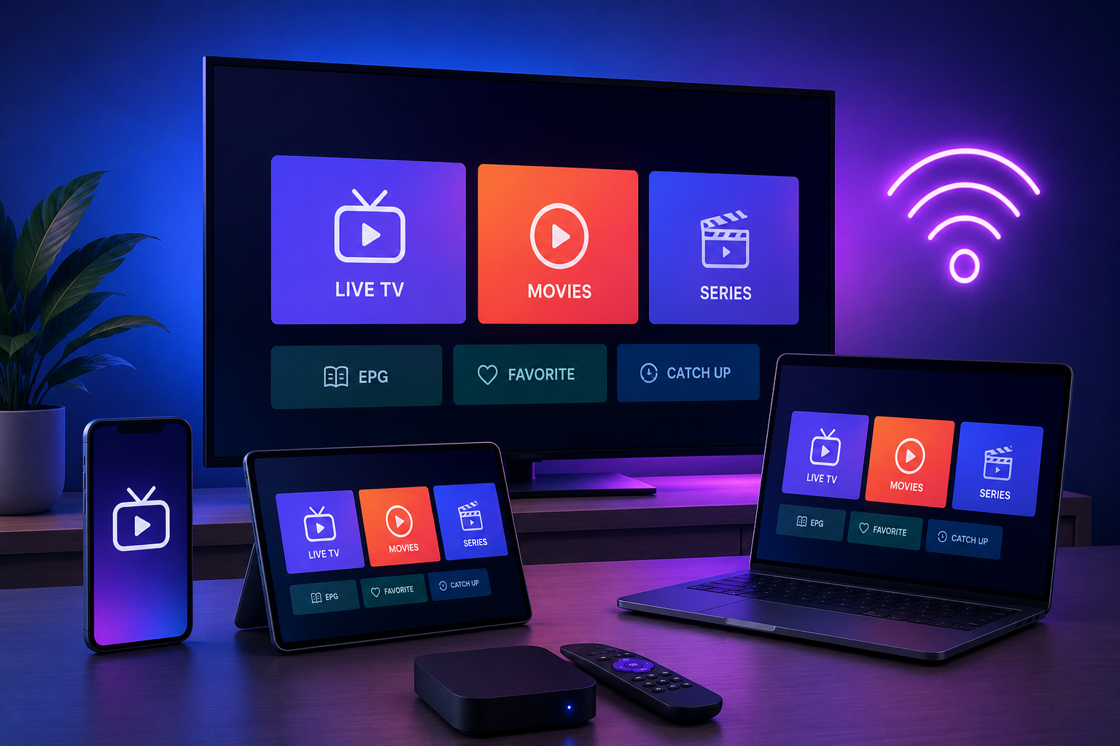
- Multi-device streaming: Watch on your TV, phone, tablet, and laptop simultaneously.
- International channels: Most premium IPTV providers include global content from the UK, Canada, Germany, India, and Latin America.
- Zero contract lock-in: Cancel or renew anytime.
- Anti-freeze technology: Premium providers route streams through optimized servers to eliminate buffering during peak hours.
The only real cost is your internet connection. If you already have broadband at home, IPTV is the highest-value television upgrade you can make in 2026.
Ideal Buyer Profile: Who Should Order IPTV Today?
Related Reading: Free PSN Gift Card: Verified Ways to Get Real Codes (2026)
IPTV isn't for everyone. It's for specific user profiles that align perfectly with its strengths:
1. The Sports Fanatic
If you're paying $50/month for a sports package on cable, IPTV gives you access to every major league, pay-per-view event, and international match at a fraction of the cost. The anti-freeze technology ensures you don't miss a goal during a critical moment.
2. The Cord-Cutter
You've already cut the cable and now juggle three or four streaming subscriptions. IPTV consolidates everything into one app with one login and one bill.
3. The Budget-Conscious Family
A family of four can watch different channels on different devices simultaneously, eliminating the need for multiple streaming accounts.
4. The Expat or International Viewer
Access to home-country channels is often the #1 reason people buy IPTV. Whether you're an American in Europe or a Brit in the US, IPTV delivers your local news, sports, and entertainment without geo-restrictions.
If any of these descriptions match you, the return on investment is immediate. If you're only watching two channels a month, a free ad-supported service might be sufficient.
How to Choose a Reliable IPTV Provider
Not all IPTV providers are created equal. The industry is unregulated, and low-quality providers can expose you to buffering, downtime, and even malware. Here's what separates a premium service from a scam:
- Verify the trial: A legitimate provider offers a short free trial or a low-cost trial period. Avoid any service that demands a full annual payment upfront without a trial.
- Check server stability: Look for providers that advertise 99.9% uptime and use anti-freeze technology to maintain stream quality during peak times.
- Confirm device support: The service should support the devices you own—Fire Stick, Smart TV, Android, iOS, and PC.
- Look for EPG and catch-up: An Electronic Program Guide (EPG) is essential for navigating live TV. Catch-up lets you watch missed episodes for up to 7 days.
- Read independent reviews: Search for real user feedback on Reddit or Trustpilot. The best providers have thousands of verified reviews.
- Customer support: A reliable provider offers 24/7 support via live chat or WhatsApp. If you can't reach a human, keep looking.
Red flags to avoid: no refund policy, a generic website with no contact info, and prices that seem impossibly low (under $5/month usually means poor infrastructure).
Our Clear Verdict on Iptv
IPTV is the most efficient, cost-effective way to watch live television in 2026. If you have broadband internet and want to cut your TV bill by 90% without sacrificing premium content, the official provider linked below is the safest, most reliable option—backed by a 7-day money-back guarantee.
Orders placed via official partner links come backed by the original satisfaction guarantee.
Frequently Asked Questions
Related Reading: Free TikTok Coins: The Only Legit Way to Get Them (2026
How does IPTV work on a smart TV?
IPTV works on a smart TV by downloading a dedicated app (like Smart IPTV, TiviMate, or the provider's native app) that connects to your provider's server. The app decodes the IP data packets and displays the stream on your screen. Most modern smart TVs—including Samsung, LG, and Android TV—are fully compatible.
Is IPTV legal and safe to use?
IPTV itself is a neutral technology, just like a web browser. It becomes illegal only if the provider streams copyrighted content without a license. Always use a reputable provider that holds proper licensing. To protect your privacy, use a VPN and ensure the provider has a strict no-logs policy.
How much does IPTV cost per month?
Premium IPTV services typically range from $10 to $15 per month, with discounts for 3-month, 6-month, or annual plans. Cable TV averages $119/month, and live streaming services range from $50 to $80/month. IPTV is the clear price leader.
What internet speed do I need for IPTV?
For standard definition, 10 Mbps is sufficient. For Full HD (1080p), you'll want at least 25 Mbps. For 4K UHD streaming, a stable 50 Mbps connection is recommended. A wired Ethernet connection will always deliver more stable performance than Wi-Fi.
Can IPTV be traced or detected?
Your internet service provider (ISP) can see that you're connecting to an IPTV server, but with a properly configured VPN, your traffic is encrypted and your activity is hidden. A premium IPTV provider that uses HTTPS and secure streaming protocols adds another layer of privacy.
Does IPTV work with Amazon Fire Stick?
Yes. The Fire Stick is the #1 device for IPTV. Simply sideload the provider's app or download a compatible player like TiviMate or IPTV Smarters from the Amazon App Store. Most providers offer a step-by-step setup guide.
What is the difference between IPTV and OTT?
IPTV runs over a managed, private network operated by the provider, which ensures better quality of service (QoS). OTT (Over-The-Top) services like Netflix and Hulu run over the public internet. In practice, IPTV offers more reliable live TV streaming, while OTT is more commonly used for on-demand content.
Do I need a VPN for IPTV?
While not mandatory, a VPN is strongly recommended. A VPN hides your IP address from your ISP, prevents bandwidth throttling, and protects your privacy. Many IPTV users report faster speeds after enabling a VPN because the ISP can no longer throttle streaming traffic.
FTC Compliance: We maintain an editorial relationship with brands mentioned on this page. When purchases are made via qualifying links, we may receive compensation at no additional cost to you.