By Daniel R. · Updated 2026-08-17 · 15 min read
If you're asking whether you should buy an iptv box, the honest answer is: it depends entirely on how you watch TV. If you want to cut cable without losing live sports, a dedicated iptv box is still the most flexible option available. But it's also the easiest device to get wrong. The setup shown above—a small box, a remote, and a 4K broadcast—is only as reliable as the hardware you choose and the subscription you pair it with.
Most buyer's guides rush straight into "top picks." This one does the opposite. Before you click "buy", let's walk through the criteria that separate a smooth streaming experience from a buffering nightmare. You'll learn exactly what specs matter, which marketing terms are useless, and how to avoid the traps that lead to buyer's remorse.
1. Why Many People Regret Their iptv box Choice
The most common complaint isn't that the box stops working—it's that it never worked well in the first place. People see a cheap iptv box with wifi for $25 and assume it performs like a flagship streaming device. Two weeks later, they're dealing with constant "Source Too Slow" errors.
Here's what typically goes wrong:
1. Insufficient RAM. A box with 1GB or 2GB of RAM might boot up fine, but the moment you switch between IPTV and YouTube, it chokes. Background processes eat the little memory available, causing apps to restart and streams to buffer.
2. Poor Wi-Fi antennas. Many budget boxes ship with tiny internal antennas that struggle to hold a stable 5GHz connection. For 4K streams, this is a death sentence. A 4K stream requires around 25 Mbps sustained—any fluctuation results in pixelation.
3. Dead-on-arrival support. The seller lists an email address that bounces back, and the "12-month warranty" is just a piece of paper in the box. When the power adapter fries after three months, you're on your own.
4. The "Lifetime" Subscription Scam. This is the fastest way to lose money. You pay $120 for a box that comes with "free IPTV for life." Two months later, the server goes dark. The box is now a paperweight, and the seller has vanished.
The common thread? Buyers skipped the research phase. Let's make sure you don't make that same mistake.
2. Criteria That Should Drive Your Decision
When evaluating a potential purchase, ignore the flashy packaging and focus on these five internal components. They determine 90% of your real-world experience.
RAM and Storage
For 2026, do not buy any iptv box with less than 4GB of RAM. IPTV apps like TiviMate or IBO Player are relatively lightweight, but Android 12/13 itself sits in the background using 2GB. You need headroom for multitasking. Storage matters less if you're purely streaming, but choose 32GB or higher if you plan to install large APK files or game emulators.
Ethernet vs. Wi-Fi 6
A Gigabit Ethernet port is the single best feature you can get on an iptv box. Wired connections eliminate the micro-stutters that plague wireless streams. If you must use Wi-Fi, ensure the box supports Wi-Fi 6 (802.11ax) on the 5GHz band. Budget boxes with Wi-Fi 4 or 5 will drop packets in congested apartment buildings, causing frame drops during fast-moving sports broadcasts.
Widevine L1 Certification
This is the hidden spec. Widevine L1 allows a device to decode copy-protected content in full HD from Netflix, Disney+, and Amazon Prime. Most cheap iptv boxes only have L3, which locks you to 480p on these apps. If you plan on replacing your smart TV apps with this box, you absolutely need L1.
Codec and HDR Support
4K HDR is standard now, but not all boxes decode modern codecs equally. Look for support for AV1, HEVC (H.265), and VP9. For HDR, you want both HDR10+ and Dolby Vision. If the listing only mentions "4K" without specifying HDR variants, assume it's a cheap clone chipset that will give you washed-out colors.
Operating System and Launcher
Android TV / Google TV is the safest ecosystem because you can sideload any IPTV app. However, beware of Chinese Android boxes running a modified launcher with intrusive ads. A clean "stock" Android TV interface is worth paying a bit extra for. Some premium boxes use custom Linux OSes (like Formuler's MyTVOnline), which offer lightning-fast channel zapping but don't run standard Android apps.
3. What You Need to Know About the Current Market
The streaming hardware market in 2026 has split into two clear camps: mainstream streaming sticks (Fire TV, Google TV) and dedicated IPTV boxes. Understanding this divide helps you make the right call.
Mainstream sticks excel at aggregating subscription apps like Netflix, Hulu, and Max. They have great software support, regular security updates, and polished remotes. However, they often skimp on Ethernet ports—you have to buy a separate dongle—and their limited RAM (2GB) makes them less ideal for heavy IPTV multi-tasking.
Dedicated iptv boxes, on the other hand, are built for one purpose: delivering live television with low latency. They come with faster CPUs, better thermal management, and software that handles M3U playlists and EPG (Electronic Program Guide) grids far more elegantly. The tradeoff is that they require a bit of technical setup.
The iptv box vs firestick debate usually comes down to this: if you live inside the streaming-app ecosystem, get a Firestick. If you're hunting for international channels, live sports packages, or want to configure multiple connections, the dedicated box wins.
Another market shift is the rise of iptv box subscription no contract plans. Monthly rolling subscriptions have replaced the old 12-month commitments. This is great for testing a service before you lock in.
4. Questions to Ask Before Buying
Write these down. If the product listing or seller can't answer them clearly, move on to the next option.
Does it have a certified Google license? An uncertified device won't have access to the full Google Play Store, and some apps (especially banking or Youtube) may not work correctly.
Can it handle multi-channel audio pass-through? If you have a Dolby Atmos soundbar, you need a box that supports Dolby Digital Plus and TrueHD pass-through via HDMI. Many budget boxes downmix to stereo, ruining the experience.
Is the Ethernet port gigabit or 10/100? A 10/100 port maxes out at 100 Mbps, which is fine for most streams but bottlenecks if you're streaming from a local home network server (like Plex).
Does it support multi-view or picture-in-picture? This is a huge feature for sports fans who want to watch two games at once. The software must support it—don't assume it will.
If you're planning to use an iptv box for multiple TVs, ask about the subscription's concurrent connection limit. You'll likely need a plan that allows at least two active streams simultaneously, which has nothing to do with the box hardware itself.
5. Warning Signs to Spot
Common red flags will save you from legal headaches and wasted cash.
✗ Pre-loaded "Free" IPTV apps. Legitimate hardware sellers don't void their warranty by pre-installing piracy apps. If a box boasts "10,000 FREE CHANNELS" out of the box, the content will disappear when the server gets shut down.
✗ No physical address or phone support. A real company has a support ticket system and a registered business address. Anonymous URLs selling $30 boxes are disposable.
✗ Aggressive upsells at checkout. "Add a 1-year subscription for only $50!"—these segments are often just resellers of free public playlists.
✗ Claims of "8K Support". There is virtually no 8K content available globally. This spec is used to hide the fact that the box uses an ancient chipset that can't properly decode modern 4K streams.
A good box pays for itself in stability, not in a checklist of absurd specs.
✓ Benefits of a Dedicated iptv box
Hardwired Ethernet for zero-lag live sports.
Multi-view mode for watching multiple channels at once.
Sideload capability to install any IPTV player.
Better cooling means sustained 4K performance without thermal throttling.
✗ Limitations & Cons
Requires manual configuration of M3U URLs and EPG sources.
Often lacks Widevine L1 for mainstream streaming apps.
Higher upfront cost compared to a portable HDMI stick.
Some cheap models have cluttered, ad-supported interfaces.
RECOMMENDED RESOURCE
iptv box
Read independent network latency reviews and hardware specs.
Find Out More About iptv box →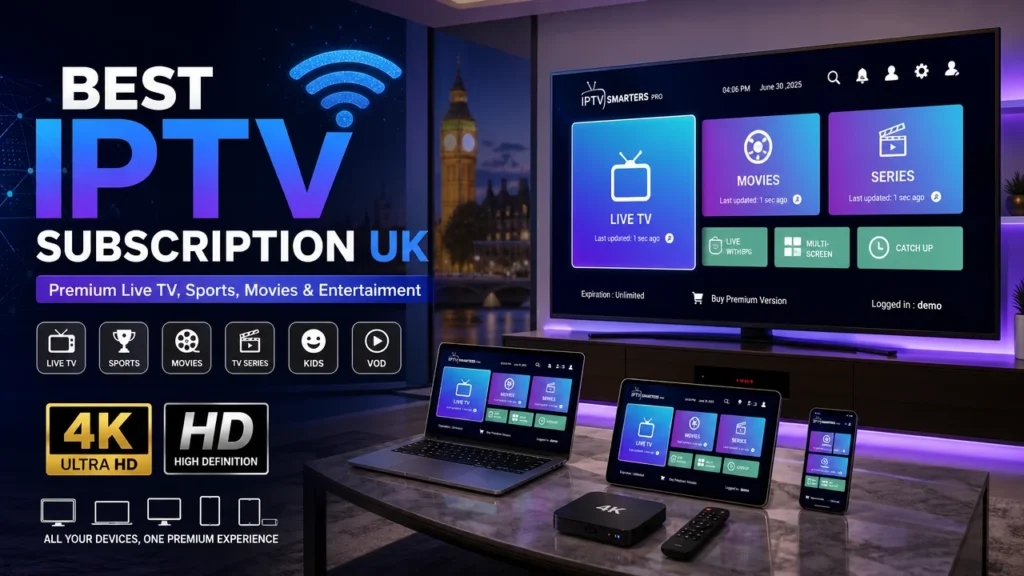
When researching the best iptv box for live sports, pay less attention to the box's marketing and more to the EPG integration. Look at the screenshot above. A clean grid with fast channel zapping is what you'll actually experience daily—not the box's packaging.
6. Comparison Table of Available Options
Here's how the main categories of devices stack up against each other for IPTV use in 2026. This will help you translate the specs into real-world performance.
The table above simplifies the "iptv box vs firestick" debate. A streaming stick is a great accessory, but it is not a workhorse. A premium iptv box provides the stable foundation that serious streamers demand.
See current details, seasonal promos, and full tier packages on the official provider page.
Learn more about iptv box →7. Recommendation by Budget and Needs
Budget: Under $50
Stick to well-known Android TV boxes (Amlogic S905X4 chipset). Look for one with 4GB RAM and a promise of stock Android TV firmware. You'll likely need to sideload IPTV apps yourself. This is the "cheap iptv box with wifi" category, but picking one with reliable firmware (e.g., Mecool or Dynalink) reduces the risk of the headaches described earlier.
Mid-Range: $60-$100
The Google TV Streamer or Fire TV Stick 4K Max are the safest recommendations here. They offer the most polished streaming experience, receive regular updates, and have wide accessory support. They lack a native Ethernet port, so to maximize IPTV stability, you'll need a USB-C Ethernet adapter (adds about $20).
Premium: $150-$250
For the best iptv box for live sports, we arrive at true purpose-built machines. The Formuler Z11 Pro Max and Nvidia Shield TV Pro dominate this space. The Nvidia Shield is better for gaming and upscaling. The Formuler is better for IPTV channel zapping, DVR recording, and multi-view. If you're buying an iptv box for multiple TVs, the premium category offers the best multi-connection handling and app stability.
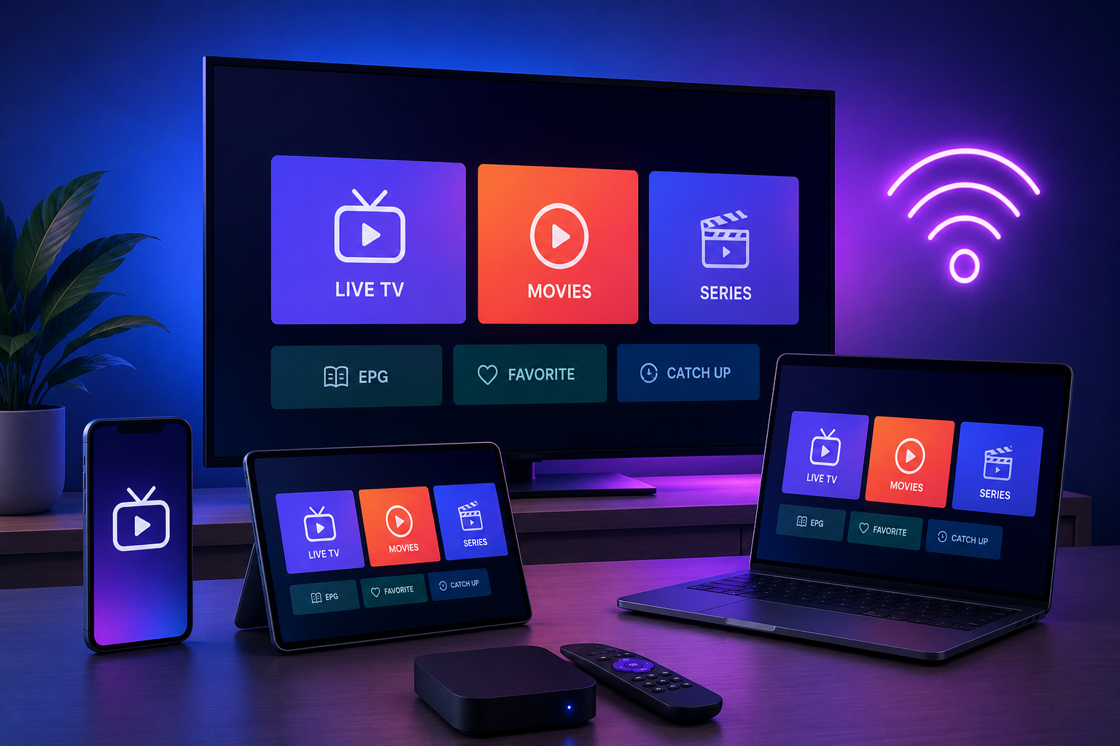
If your household watches different channels in different rooms, the network setup is as important as the box itself. The image above illustrates a typical home server / multi-room setup. A single iptv box can only output to one screen directly. To extend it, you have two options: run HDMI over Ethernet (gives you identical resolution but requires cabling) or purchase a second box and share the subscription through your provider's multi-connection policy.
8. How to Maximize Your iptv box Investment
You've bought the hardware. Now let's get the most out of it. Follow these numbered steps to ensure a crystal-clear, buffer-free viewing experience.
Step 1: Wire your connection. Even if you have Wi-Fi 6, a $5 Ethernet cable will always be faster and more stable. Plug the iptv box directly into your router.
Step 2: Update everything. Go to Settings -> About -> System Updates. Update the box. Then update your IPTV application. Using outdated software is the leading cause of codec mismatches.
Step 3: Set up your EPG properly. If your IPTV playlist doesn't include EPG data, manually add a URL (e.g., `
Step 4: Choose the right player. TiviMate is the gold standard for Android TV. Set it to "Auto Frame Rate" (24p/50p/60p) to avoid judder during live sports.
Step 5: Use a VPN. Some internet service providers throttle bandwidth for streaming traffic. A VPN masks the data packets, which often resolves persistent buffering issues.
Step 6: Restart weekly. Like any Android device, an iptv box collects memory leaks over time. A full power cycle once a week clears the temporary files and restores peak performance.
Featured Streaming Selection:
Explore iptv box Plans →Affiliate Disclosure: Clicking this secure link verified by our network supports our team through standard partnership terms at zero extra cost to your invoice.
Choosing the right iptv box comes down to knowing exactly where and how you'll watch. Don't be lured by the cheapest option. Plan for your subscription model, decide on an Ethernet connection, and verify the Widevine status if you care about HD streaming on mainstream apps.
Bottom line: a streaming stick is a convenience; a dedicated iptv box is a utility device. Determine your priorities, use this guide as a checklist, and you'll enjoy your setup without the nagging feeling that you got scammed.
Frequently Asked Questions
This article contains affiliate links. Our editorial analysis remains independent.