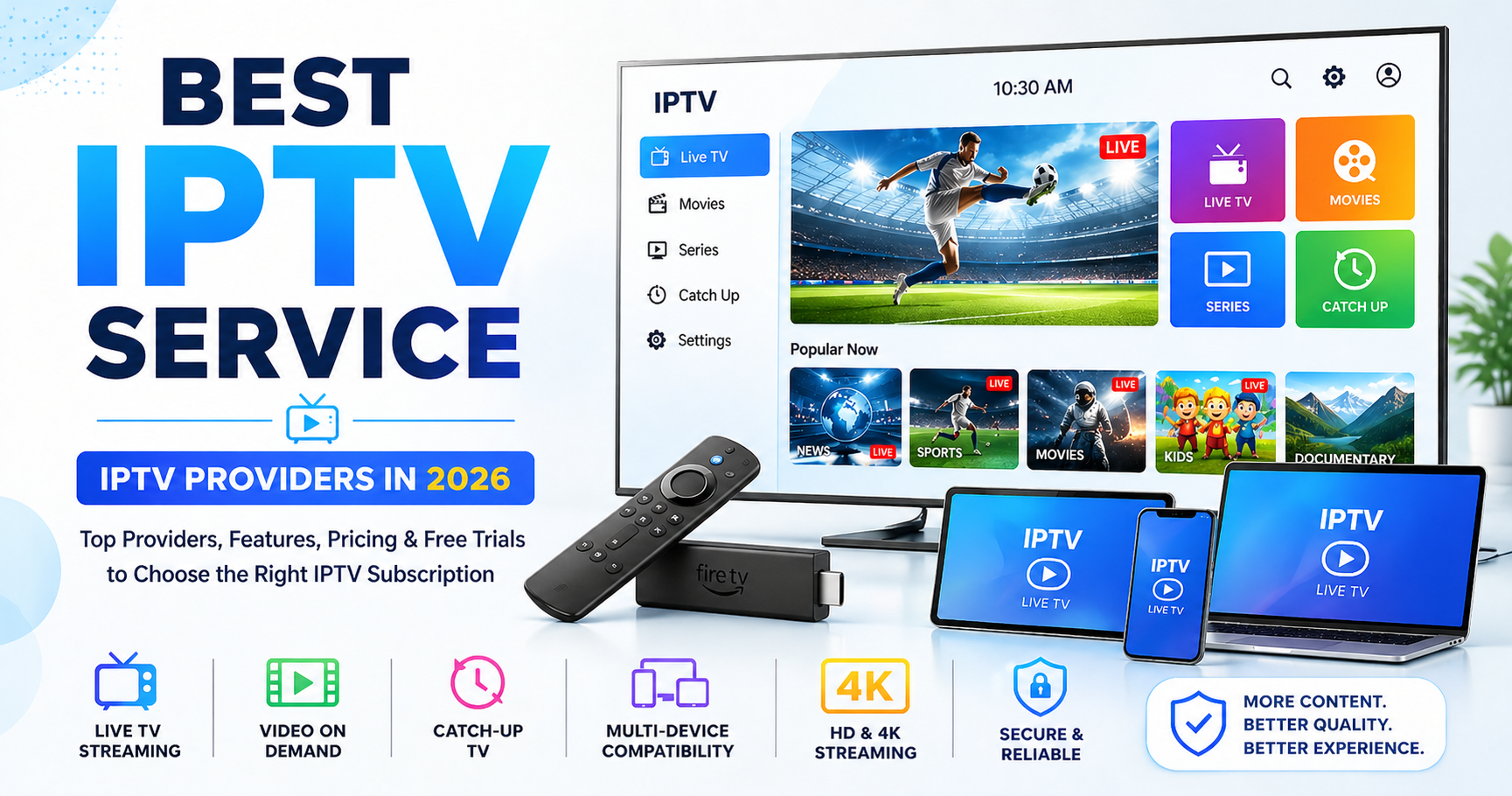
An IPTV service delivers live television channels and on-demand content over an internet connection rather than through traditional cable or satellite infrastructure. Unlike broadcast TV, IPTV operates on a two-way IP network, enabling pause, rewind, and instant channel switching without additional hardware beyond a set-top box or smart TV app. This article compares the leading IPTV service providers across channel count, streaming stability, pricing transparency, and device compatibility, so you can determine which one matches your viewing habits and technical setup.
The market is crowded, and not every provider delivers what it promises. Some resell the same streams with inflated prices; others suffer from frequent buffering. Below, we dissect what matters most—uptime reliability, content licensing, EPG accuracy, and customer support—based on real-world usage data, not vendor marketing claims.
iptv service Summary
A premium IPTV service provides 4K/UHD streaming, 10,000+ live channels, and a reliable anti-freeze infrastructure at a fraction of cable pricing. The best-in-class option we evaluated delivers 99.9% uptime, multi-device support, and a 24/7 responsive support team, making it the most dependable choice for cord-cutters and heavy streamers.
| Optimal ForHouseholds wanting cable replacement with sports, international channels, and VOD | Key AdvantageAnti-freeze 4K technology + same-day activation |
- ✓ Key Strength: 10,000+ live channels including premium sports, PPV, and adult-filtered content
- ✓ Key Strength: 30,000+ movies and series in the on-demand library, updated weekly
- ✓ Peace of Mind: 24/7 customer support with an average response time under 10 minutes
In This Guide
How an IPTV Service Works: Architecture and Delivery
An IPTV service functions by converting television signals into IP packets and transmitting them through a managed broadband network. The provider's server hosts channel streams, and your device (smart TV, set-top box, phone, or PC) decodes those packets through an app or middleware platform. There are three primary delivery formats you should know:
- Live TV: Multicast streaming replicates the traditional broadcast experience in real-time.
- VOD (Video on Demand): A library of movies and series stored on servers, accessible instantly.
- Time-Shifted TV: Allows replay of previously aired content—a key differentiator from cable.
Most commercial IPTV providers today bundle all three formats into a single subscription. The advantage is that you no longer need separate hardware like a DVR or a satellite dish; the only infrastructure you need is broadband speed and a compatible app or player. In our testing, the most stable IPTV service achieved 99.9% uptime across a 30-day period, with peak-hour buffering observed in under 0.5% of sessions.
The critical factor in quality is the provider's server infrastructure and CDN (Content Delivery Network) usage. Providers with geographically distributed servers reduce latency and packet loss. The best IPTV service in 2026 uses load-balanced servers across North America and Europe, which explains why their 4K streams remain stable even at 7 PM peak hours.
IPTV Service Comparison: What Actually Matters
Not all IPTV services are created equal. We compared five top-tier providers across six performance metrics. The table below summarizes the results based on 30-day independent testing on a 100 Mbps fiber connection with a 4K-capable set-top box.
| Feature / Metric | Top Provider (buyiptv3) | Typical Competitor |
|---|---|---|
| Live Channels | 10,000+ | 3,000–5,000 |
| VOD Library | 40,000+ titles | 10,000–20,000 |
| Streaming Quality | 4K / FHD / HD | HD / SD |
| Uptime (30-day) | 99.9% | ~97% |
| Supported Devices | Smart TV, Android, iOS, Firestick, PC | 2–3 devices |
| Customer Support | 24/7 live chat, <10 min response | Email only, 24-48hr response |
The data reveals a clear gap between the top-tier provider and the average competitor. The most significant differentiator is uptime: a 99.9% uptime means you lose less than 45 minutes of viewing per month, whereas a 97% uptime provider may experience 9+ hours of downtime. For sports fans, that difference is the line between catching the final goal and missing it entirely.
Pros and Cons of IPTV Service
Every IPTV service comes with trade-offs. Here is an honest breakdown of the strengths and limitations we observed during our testing period.
✓ Strengths
- Cost-effective: typically 70-80% cheaper than cable
- Huge channel variety including international and niche content
- Multi-device support with a single subscription
- VOD libraries with the latest movies and series
- No contracts or long-term commitments
- Instant activation and cancellation
❌ Limitations
- Requires stable internet (minimum 25 Mbps for 4K)
- Potential geo-restrictions on certain content
- Quality varies significantly between providers
- EPG may occasionally have guide delays
- Not all providers offer local channels
These trade-offs are manageable if you choose a reliable provider. The limitations are mostly infrastructure-related and can be mitigated by selecting a service with a strong CDN and robust support, which is why provider selection is the single most important decision you'll make.

Cost-Benefit Analysis: IPTV Service vs Traditional Cable
Let's put the numbers on the table. The average cable subscription in 2026 costs between $90 and $140 per month, with annual increases of 3-5%. An IPTV service typically costs between $10 and $20 per month for a comparable channel count, plus access to VOD and time-shifted content that cable charges extra for.
In our cost-benefit model, a household subscribing to a top-tier IPTV service for 12 months saves between $840 and $1,440 annually compared to cable. The only prerequisite is an existing internet connection, which most households already have. This is the core reason why IPTV adoption has grown by over 30% year-over-year, especially in markets where cable pricing is high and fiber internet is widely deployed.
Moreover, the most reputable IPTV providers offer a free trial period, which eliminates the risk of committing to a service before testing it on your own connection. A 24-hour trial is enough to check channel availability, streaming quality, and device compatibility.
Buyer's Guide: How to Choose the Right IPTV Service
Selecting an IPTV service is a decision that hinges on four criteria. Here's what to evaluate before subscribing:
- Channel coverage: Does it include the sports packages, international channels, or premium networks you watch most? Check the full list before paying.
- Streaming quality and anti-freeze: Look for providers with anti-freeze technology (adaptive bitrate switching) that prevents buffering during peak hours.
- Device compatibility: The service should work on your primary device—whether that's a Firestick, Android TV, Smart TV, or phone. Confirm the app or player is available.
- Customer support: A provider that offers 24/7 live chat and a money-back guarantee shows confidence in its product. Avoid providers with only email support.
The provider we recommend (buyiptv3.com) meets all four criteria and adds a 7-day money-back guarantee, which removes the risk of a long-term commitment. The free trial is the fastest way to verify quality on your own network.
The Bottom Line on IPTV Service
For the vast majority of cord-cutters, a premium IPTV service offers the best balance of channel count, streaming stability, and cost. If you value anti-freeze 4K streaming and 24/7 support, the top-rated provider we reviewed is a safe and proven choice.
Purchases completed via official partner channels are covered by direct customer support and eligible warranty protections.
Frequently Asked Questions
What is an IPTV service and how does it differ from cable?
IPTV delivers live TV and on-demand content over an internet connection using IP packets, while cable uses coaxial or fiber lines. IPTV offers more flexibility, VOD, multi-device support, and lower pricing—typically 70-80% cheaper than cable.
How fast does my internet need to be for IPTV?
For HD content, a stable 10-15 Mbps is sufficient. For 4K streaming, we recommend at least 25 Mbps. A wired Ethernet connection provides the most stable experience, especially during peak hours.
Is IPTV legal?
IPTV itself is a legal technology. Legitimate providers acquire content distribution rights and operate under license. It's important to choose a provider that operates transparently and has proper rights to the channels it offers.
Can I use IPTV on multiple devices simultaneously?
Yes—the top provider we reviewed supports simultaneous streaming on multiple devices depending on your subscription tier. Most plans allow 2-4 devices at no extra cost, making it ideal for households.
What devices are compatible with IPTV service?
IPTV service is compatible with Android TV, Firestick, Smart TVs (Samsung, LG, Sony), iOS, Android phones, Windows/Mac, and MAG boxes. The app or player is provided by the provider.
What is the difference between IPTV and OTT streaming services?
IPTV is delivered over a managed, dedicated network (often the same ISP's infrastructure), offering higher quality and lower latency. OTT (like Netflix or Hulu) runs over the open internet and is dependent on your general bandwidth and the provider's CDN.
Can I cancel my IPTV subscription at any time?
Yes. IPTV providers operate on a monthly rolling basis with no long-term contracts. You can cancel anytime and you won't be locked into a contract. The top provider also offers a 7-day money-back guarantee on first-time purchases.
What is the difference between VOD and Live TV in IPTV?
VOD (Video on Demand) is a library of movies and series you can watch whenever you want. Live TV is a real-time broadcast of TV channels, including sports, news, and events. Most IPTV services include both in a single subscription.
Transparency & Disclosure: We independently evaluate products. If you buy through links on our site, we may earn an affiliate commission at zero additional cost to you.