By Daniel R. · Updated 2026-08-20 · 11 min read

You searched because you are tired of guessing. Every cheap subscription starts to look like a potential legal problem, and every “just use this” recommendation makes the question worse. The short answer is straightforward: IPTV technology itself is legal. What creates risk is whether the provider has licensed the channels and content it sells.
In the United States, legal IPTV in the USA does exist. It comes from providers that hold distribution rights, publish business details, support official payment methods, and usually appear in app stores. If you are looking at a suspiciously cheap package with every premium sports network, the legality question has likely already answered itself.
This guide breaks down IPTV legality explained in practical terms: why most answers fail, what experienced users check, and how to find legal IPTV without getting burned by resellers or pirate feeds.
The Real Frustration Behind “Is IPTV Legal?”
The frustration isn’t just about legality. It’s about not knowing whether you’re one invoice away from a service shutdown, a frozen payment, or a legal notice. Many people have already been burned by a seller who vanished after a month, a resold subscription that stopped working, or a “fully legal” service that was anything but.
The confusion grows because two things can be true at once: IPTV is a legitimate delivery method, and many IPTV sellers are not legitimate. Streaming over internet protocol is used by major broadcasters and cable replacements. The difference between IPTV legal vs illegal is rarely the app or the interface—it’s the licensing underneath.
Three Common Mistakes When Judging IPTV Legality
Most people misread the legal question because they focus on the wrong signals. These three mistakes keep resellers in business and make the confusion worse.
Mistake 1: Assuming all IPTV is illegal
IPTV is not a crime. It’s a technical protocol. Cable-replacement services, sports league apps, and international broadcasters all use IPTV-style delivery legally. Dismissing every IPTV option means missing out on legitimate providers that operate with proper agreements.
Mistake 2: Assuming “cheap and works” means legal
A working stream does not prove a service has rights. Pirate IPTV providers simply rebroadcast licensed feeds without permission. The fact that a channel loads today says nothing about whether the provider can legally sell it tomorrow.
Mistake 3: Ignoring regional and device limitations
A service can be legal in one country and not licensed in another. Some genuinely licensed platforms restrict access by region. Buying through a loophole or a VPN does not create licensing where none exists. The legality of IPTV depends on where you are and where the provider is authorized.
Why Most “Quick Answers” Make It Worse
Search for “is IPTV legal” and you’ll get two useless extremes. One side says all IPTV is fine because streaming is streaming. The other says all IPTV is illegal and you should never use it. Neither helps you evaluate a specific provider.
Generic advice also fails because it ignores the marketplace reality. Lists of “legal IPTV providers” are often recycled templates with affiliate links to unlicensed services. Social media recommendations are frequently paid promotions from resellers. A VPN is another common fix that gets misunderstood: a VPN protects privacy, but it cannot turn an unlicensed service into a legal one.
What Experienced Users Check Before Paying
People who stream without legal headaches don’t rely on a single “legal” badge. They look for operational signals that are hard for pirate services to fake.
They check whether the provider is a real company with public business details, not just a Telegram handle. They look for official app store availability, which requires the service to pass basic app review. They expect normal payment methods like credit cards or PayPal, because those can be disputed and leave a paper trail. They avoid sellers who only accept cryptocurrency, gift cards, or direct bank transfers from strangers.
Experienced users also read the channel list critically. A legal provider will not offer 10,000 channels for the price of a sandwich. Broadcast licensing is expensive, and real services reflect that in their pricing. If the offer looks too good to be true, it usually is.
How to Find Legal IPTV: Step-by-Step
You can apply a simple framework before spending money. This process removes most illegal or unreliable options quickly.
Step 1: Start with official app stores
Search your device’s official app store for IPTV apps from named companies. Legitimate providers tend to list their app publicly. An app that must be sideloaded or installed through a random APK is a red flag, though not always a guarantee of illegality.
Step 2: Verify the business behind the service
Look for a registered business name, a physical address, a privacy policy, and terms of use. These should be accessible before checkout. If the only contact is an email or messaging username, you’re dealing with a reseller or pirate operation.
Step 3: Compare pricing to licensed services
Real licensed IPTV is not $8 a month for everything. Look at established streaming and cable-replacement services as a pricing benchmark. If a service offers significantly more channels for significantly less money, the licensing math does not add up.
Step 4: Check payment methods
Credit cards and PayPal allow chargebacks if the service fails or misrepresents itself. Illegal services avoid these because they attract disputes and leave a trail. If a seller insists on crypto or gift cards, walk away.
Step 5: Test with a short-term plan first
A legal provider will usually offer a monthly plan or trial. Start small, test on your own network, and monitor whether streams are stable during peak hours. Do not prepay for a year to save a few dollars if you’re still unsure about legitimacy.
Legal IPTV vs Illegal IPTV: What to Expect
✓ Benefits & Pros of Legal IPTV
Documented licensing and lower legal risk
Official app store availability and device support
Customer support that doesn’t disappear
Standard payment methods and dispute protection
✗ Limitations & Cons
Higher monthly price than pirate sellers
Regional licensing may block some channels
Smaller catalog than “everything for $10” offers
Requires reading terms instead of blind buying
RECOMMENDED RESOURCE
is iptv legal
See current details, seasonal promos, and full tier packages before you commit.
Learn more about is iptv legal →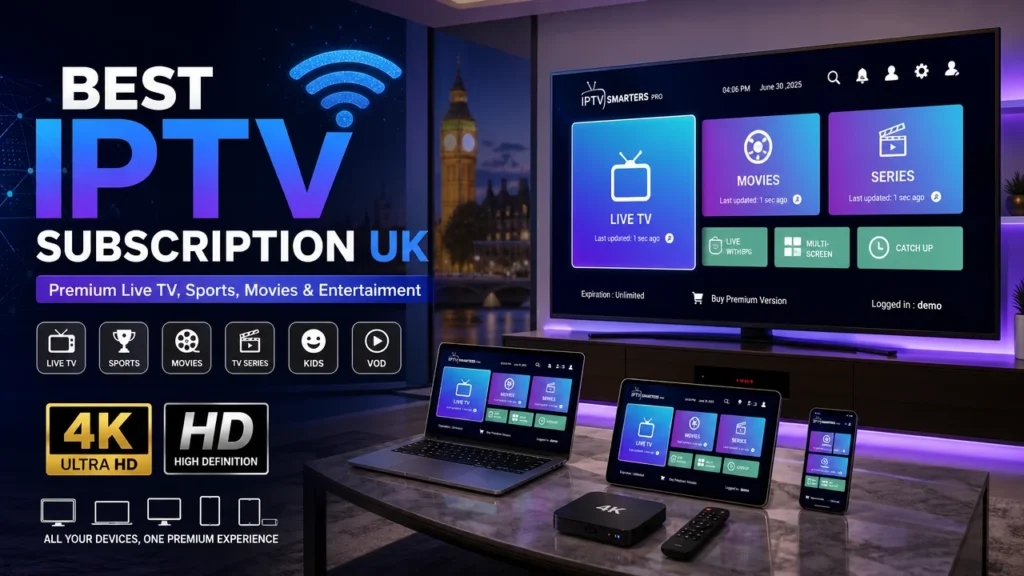
The image above shows what a legitimate IPTV interface can look like: clear categories, sport sections, and 4K support. But do not mistake a clean layout for proof of legality. Many pirate services copy official interfaces. The boring licensing details are the real test.
Realistic Results When You Choose a Legal Provider
If you choose a licensed service, expect a more stable experience and clearer accountability. Streams are less likely to disappear mid-season, and support is more likely to answer when something breaks. You won’t get every channel in the world for pocket change, but you also won’t have to wonder whether the service will survive the month.
The tradeoff is price and selection. Legal services cost more because rights cost money. Some content may be blocked in your region. That is not a flaw; it’s a sign the provider is actually respecting licensing agreements.
Pitfalls to Avoid When Searching for a Safe IPTV Subscription
Even when you know what to look for, it’s easy to slip. Avoid these common traps:
- Buying from social media ads — many pirate IPTV sellers run polished ads with fake reviews.
- Trusting “unlimited channels” language — legitimate providers name their network partners.
- Paying with crypto or gift cards — this removes your ability to dispute and recover money.
- Skipping the terms of service — the terms often reveal whether the provider claims no responsibility for content.
- Using a VPN as a legality shortcut — VPNs protect privacy but do not create broadcast rights.
What Works vs What Does Not: Legal IPTV Compared
Read independent network latency reviews and hardware specs before choosing a provider.
Find Out More About is iptv legal →
The comparison above and the graphic below make the same point: legal and illegal IPTV can look nearly identical on screen. The safe choice depends on what you verify before entering payment information.
Where to Buy Legal IPTV Without Falling for Pirate Services
The safest route is to start with streaming platforms you already know are licensed. For IPTV-specific services, look for providers that name their network partners and publish legal terms. Avoid marketplaces that list dozens of resellers with identical wording and no business identity.
If you’re comparing options, check whether the service works across the devices you actually use, what support looks like after purchase, and what the refund policy says. A legitimate provider should make all of that clear before checkout.
Featured Streaming Selection:
Explore is iptv legal Plans →Affiliate Disclosure: Clicking this secure link verified by our network supports our team through standard partnership terms at zero extra cost to your invoice.
Frequently Asked Questions
This article contains affiliate links. Our editorial analysis remains independent.