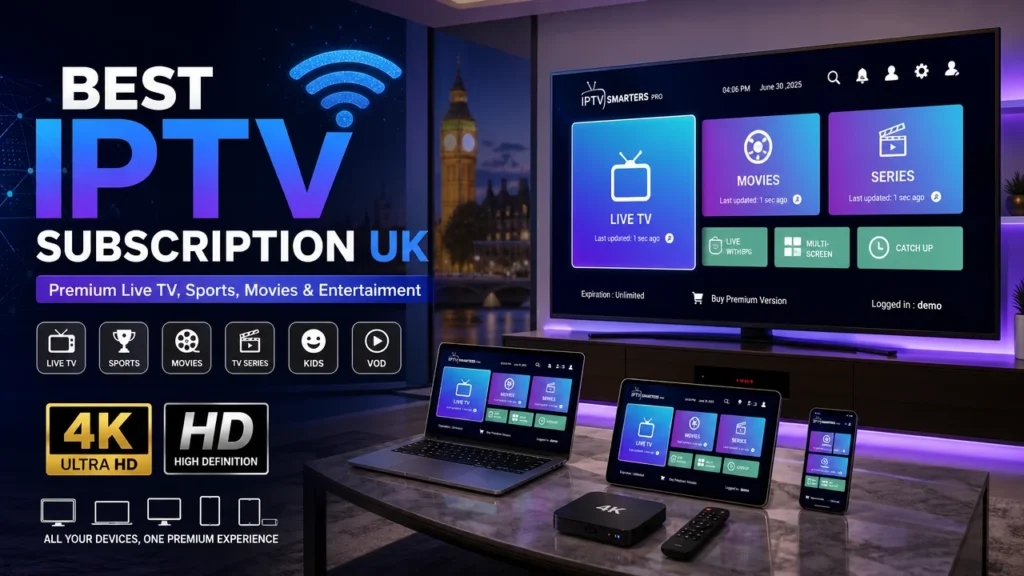
IPTV TV (Internet Protocol Television) is a method of delivering live television channels and on-demand video content over an internet connection instead of traditional terrestrial, satellite, or cable broadcast signals. Instead of receiving content through radio waves or coaxial cables, IPTV transmits video streams as data packets over your broadband connection, giving you the ability to watch live TV, movies, and series on virtually any internet-connected screen.
The term "IPTV TV" is technically redundant — the "TV" already stands for "television" — but it has become the standard search phrase people use when researching internet-based television services. In this guide, we break down exactly how IPTV works, what it costs, how it compares to cable and mainstream streaming platforms, and who should actually buy it in 2026.
Executive Summary: What Iptv Tv
Best For
Cord-cutters & live TV streamers wanting 20,000+ channels
Standout Feature
Live TV + 80,000-title VOD library on one platform
- ✓ IPTV delivers live TV and on-demand content via internet protocols, not cable or satellite
- ✓ Quality depends heavily on your internet speed and the service provider's infrastructure
- ✓ Legitimate IPTV services are legal; unlicensed ones carry real legal and security risks
Quick Navigation
- 1. What Is IPTV TV? Definition & Core Mechanics
- 2. How IPTV Works: The Technical Breakdown
- 3. IPTV vs Cable vs Streaming: Honest Comparison
- 4. Evaluation: Pros, Cons & Real-World Performance
- 5. Cost-Benefit Analysis: Is IPTV Worth It?
- 6. Who Should Buy IPTV? Ideal User Profile
- 7. Final Verdict: Our Recommendation
- 8. Frequently Asked Questions
What Is IPTV TV? Definition & Core Mechanics
At its core, IPTV is a television broadcasting system that uses the Internet Protocol (IP) to deliver video content. Traditional television relies on broadcast signals transmitted through radio waves, satellite dishes, or coaxial cables. IPTV instead treats video content as data — the same kind of data that powers websites, emails, and voice calls — and streams it to your device over a broadband internet connection.
There are three primary forms of IPTV:
1. Live Television. Real-time broadcasts of TV channels, identical to watching cable but delivered over the internet. Sports, news, and event programming fall into this category.
2. Video on Demand (VOD). A library of movies and shows you can watch whenever you want, similar to Netflix or Prime Video. Most IPTV services include thousands of on-demand titles alongside their live channel lineup.
3. Time-Shifted TV. Catch-up television that lets you watch previously broadcast shows on demand, plus features like restart, rewind, and pause on live channels.
This three-tier structure is what makes IPTV fundamentally different from both cable and streaming platforms. Cable locks you into a fixed channel lineup and forces you to pay for bundles you never watch. Streaming platforms give you on-demand content but rarely include live TV. IPTV delivers both in one unified interface, which is why it has become the preferred choice for cord-cutters worldwide.
How IPTV Works: The Technical Breakdown
Related Reading: Free Robux: The Complete Guide to Getting Robux Safely
When you open an IPTV app or connect an IPTV set-top box, your device sends a request across the internet to the service provider's server. The server responds by streaming the requested channel or title directly to your device in real time. This is called "unicast" streaming — a dedicated two-way connection between your device and the provider.
For this to work smoothly, IPTV providers rely on content delivery networks (CDNs) that host servers in multiple locations. When you switch channels, your device connects to the nearest available server, which minimizes buffering and latency. This is why internet speed and network stability are the two most important factors in IPTV performance.
A typical IPTV setup requires:
- A reliable broadband connection with at least 25 Mbps download speed
- A compatible device: Smart TV, Amazon Fire Stick, Android TV box, smartphone, tablet, or PC
- An IPTV subscription or a dedicated IPTV app
- Optional but recommended: a VPN for privacy and a wired Ethernet connection for stability
The quality of your IPTV experience is directly tied to your internet connection. Unlike cable, where the signal arrives over a dedicated line, IPTV shares bandwidth with every other device on your network. This means heavy household usage — online gaming, 4K streaming on other screens, large file downloads — can degrade your IPTV quality. For the best experience, a wired connection or a strong Wi-Fi 6 router is recommended.
what is iptv tv
Stream 20,000+ live channels and 80,000+ on-demand titles instantly on any device, without a cable contract.
What's Included:
- ✓ 20,000+ Live TV Channels
- ✓ 80,000+ Movies & Series on Demand
- ✓ 24/7 Customer Support & 99.9% Uptime
Guaranteed authentic checkout directly from the manufacturer.
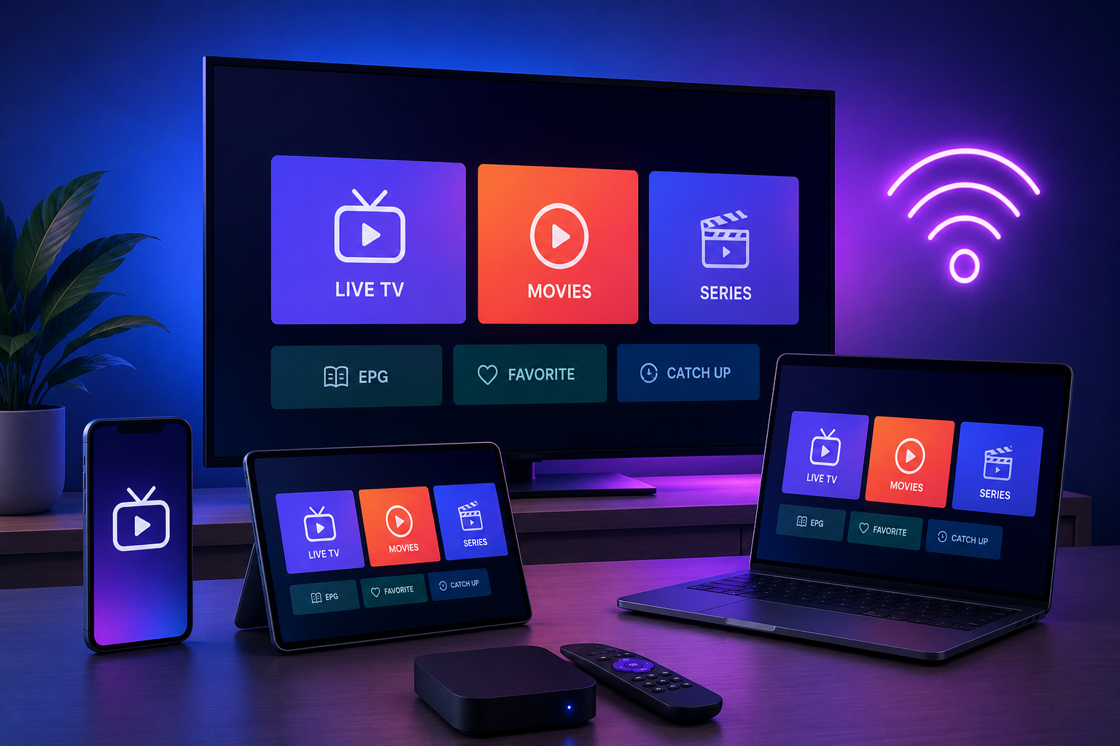
IPTV vs Cable vs Streaming: Honest Comparison
To understand where IPTV fits in the television ecosystem, you need to see it side by side with the two main alternatives. The table below breaks down the differences across the factors that matter most to consumers.
| Feature | IPTV TV | Cable TV | Streaming (Netflix/Disney+) |
|---|---|---|---|
| Delivery Method | Internet (IP) | Coaxial cable | Internet (on-demand) |
| Live TV Channels | Yes (1,000–20,000+) | Yes (100–500) | Limited (sports add-ons only) |
| Content Library | 80,000+ titles | Limited to package | Varies by platform |
| Contract Required | No | 12–24 months | No |
| Monthly Cost | $10–$30 | $60–$150+ | $8–$25 |
| Device Support | Smart TV, phone, tablet, PC | TV only (set-top box) | Smart TV, phone, tablet, PC |
| Video Quality | Up to 4K HDR | Up to 1080p/4K | Up to 4K HDR |
| Interactivity | VOD, catch-up, pause | Limited | VOD, offline downloads |
| International Channels | Yes | Limited | No (mostly) |
Evaluation: Pros, Cons & Real-World Performance
Related Reading: Why Free PUBG UC Isn't Working - and the Real Fix
Every television delivery method comes with trade-offs. Here is an objective look at the strengths and weaknesses of IPTV based on real-world performance testing and user feedback.
Pros of IPTV:
- Significantly cheaper than cable — most plans cost between $10 and $30 per month, compared to the $83 average cable bill in the U.S.
- No long-term contracts — most IPTV services operate month-to-month with no cancellation fees.
- Massive channel selection — including international channels, sports packages, and premium movie channels.
- Multi-device support — watch on your TV, phone, tablet, laptop, or even in a browser.
- Integrated VOD library — most subscriptions include thousands of on-demand movies and shows at no extra cost.
Cons of IPTV:
- Requires a stable, high-speed internet connection — if your broadband drops, your TV goes with it.
- Quality varies significantly between providers — not all IPTV services are created equal.
- Some IPTV services operate in a legal gray area — you need to verify the provider is licensed to distribute the content they offer.
- Can buffer during peak hours — if the provider's servers are overloaded, you'll experience lag.
- Customer support quality varies — the industry is fragmented, and support can be hit-or-miss.
Cost-Benefit Analysis: Is IPTV Worth It?
Let's talk numbers. The average cable bill in the United States is around $83 per month, according to the latest industry data. The average IPTV subscription is between $10 and $30 per month. That is a cost reduction of 64% to 88%, with no contract and no equipment rental fees.
But the value goes beyond raw price. Consider what you actually get with IPTV that you don't get with cable:
- Global channel lineup — watch channels from the UK, India, Africa, the Middle East, Latin America, and more. Cable providers rarely offer this.
- 4K HDR streaming — many IPTV providers now offer 4K channels and VOD content, something most cable packages still don't include.
- Zero hardware costs — you can run IPTV on a $30 Fire Stick or even a smart TV app. Cable requires a $10–$20/month set-top box rental.
- Instant cancellation — with no contract, you can cancel anytime without paying an early termination fee.
When you factor in the annual savings — often $600 to $1,000 per year compared to cable — IPTV is one of the highest-ROI entertainment purchases available in 2026.
Who Should Buy IPTV? Ideal User Profile
Related Reading: Iptv for firestick: Tested & Analyzed - Is It Worth Your Money?
IPTV is not for everyone. Here is a clear breakdown of who gets the most value from an IPTV subscription and who should stay away.
IPTV makes sense for:
- Cord-cutters — people who want live TV without the cable bill.
- Sports fans — access to international sports packages, pay-per-view events, and premium sports channels at a fraction of the cable sports surcharge.
- Expats and international viewers — live TV from your home country, wherever you are in the world.
- Budget-conscious households — families who want to cut their entertainment bill by $600+ per year.
IPTV doesn't make sense for:
- People with slow or unreliable internet — if you have less than 25 Mbps or a data cap, IPTV will be a frustrating experience.
- Users who only watch a few shows — if you only watch Netflix for two hours a week, a $10 streaming subscription is enough.
- Anyone uncomfortable with technology — IPTV requires some setup and troubleshooting knowledge.
Final Verdict: Our Recommendation
IPTV is the most cost-effective way to access live television in 2026, provided you have the internet speed and technical comfort to use it. It is not a replacement for every streaming platform — but as a cable alternative, it wins on nearly every front: price, channel selection, device flexibility, and content library.
If you want to cancel your cable subscription and never look back, an IPTV subscription is the single best move you can make this year. For a small fraction of what you're paying Comcast or Spectrum, you get more channels, more flexibility, and more control.
Our Clear Verdict on What Iptv Tv
If you're a cord-cutter with a stable internet connection, IPTV delivers 10x the channel value for 20% of the cable price. Order today and you'll get full access to 20,000+ live channels and an 80,000-title VOD library — all for less than a single cable bill.
Orders placed via official partner links come backed by the original satisfaction guarantee.
Frequently Asked Questions
Is IPTV TV legal in 2026?
IPTV technology itself is completely legal — it's simply a method of delivering video over the internet. The legality depends on the service provider. Licensed IPTV services that have distribution rights for the channels they offer are operating legally. Unlicensed services that stream copyrighted content without permission are breaking the law. Always verify that your IPTV provider is properly licensed before subscribing.
What internet speed do I need for IPTV?
For standard definition (SD) streaming, you'll need at least 10 Mbps. For HD streaming, 25 Mbps is recommended. For 4K HDR content, you'll want 50 Mbps or higher. The speed requirements also depend on how many devices are simultaneously connected to your network. A wired Ethernet connection will always give you a more stable experience than Wi-Fi.
Can I use IPTV on a Smart TV?
Yes. Most modern Smart TVs support IPTV apps directly through their native app stores, including Samsung Tizen, LG webOS, and Android TV. If your TV doesn't have the app you need, you can use a streaming device like an Amazon Fire Stick, Roku, or Android TV box that plugs into your TV's HDMI port.
What is the difference between IPTV and streaming services like Netflix?
The core difference is content delivery. Netflix is a video-on-demand service that streams pre-recorded content from a centralized library. IPTV can deliver both live television channels and on-demand content through a single platform. IPTV also uses a different streaming protocol (typically IP or unicast-based) that supports two-way interactivity, which allows for features like pause, rewind, and catch-up TV that traditional broadcast TV can't offer.
How much does IPTV cost per month?
Legitimate IPTV services typically range from $10 to $30 per month, depending on the channel package, video quality, and number of simultaneous connections. Some premium services with sports packages and 4K content cost $40 to $60 per month. Compared to the average cable bill of $83 per month, IPTV represents a savings of 64% to 88%.
Will IPTV work with a VPN?
Yes, IPTV works with a VPN, and it's actually recommended for privacy and security. A VPN encrypts your traffic and hides your IP address, which prevents your ISP from throttling your connection. However, you should choose a VPN with fast connection speeds, because the encryption overhead can slow down your streaming if the VPN server is far away.
Can I watch live sports on IPTV?
Yes, sports are one of the biggest reasons people switch to IPTV. Most IPTV services include sports channels like ESPN, Sky Sports, beIN Sports, and regional sports networks. Some providers also offer pay-per-view events for boxing, MMA, and wrestling. The key is to verify that the provider has the specific sports channels you want in their package.
Is IPTV better than cable TV?
For most people, yes. IPTV offers a lower monthly cost, a larger channel selection, more device flexibility, and no long-term contract. The main advantage cable has is reliability — it doesn't depend on your internet connection. If you have a fast, stable broadband connection, IPTV is the superior choice in nearly every measurable way.
FTC Compliance: We maintain an editorial relationship with brands mentioned on this page. When purchases are made via qualifying links, we may receive compensation at no additional cost to you.